Those who do not grow old

Those who do not grow old

One of the big problems we try to solve in financial planning is... how much money do you need in your life?

We talk about expenses, potential costs, investments, savings but one big piece of the puzzle is missing. When will you die?

Tomorrow? Or at age104?

It’s a pretty major factor that we have no clue about.

We “solve” that problem by making a reasonable guess. By looking at actuarial tables we say - what’s the % chance that you at age ____ will live to age _____.

The financial planning standards are to plan until you have a 25% chance of living past a certain age.
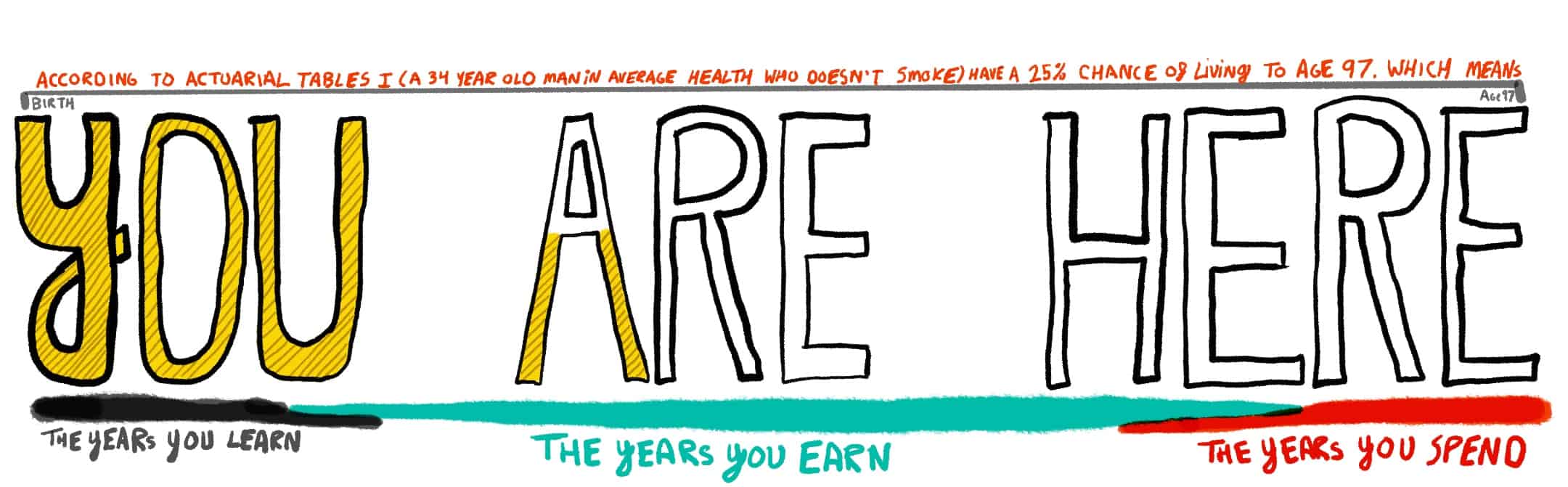
Isn’t that simple? Not really.

The hard question at the core of this problem is not the math of “how much do I need to live to 95”. That can be estimated with a few formulas and a financial calculator.

The hard question is how do we balance your need to live and enjoy your life now with the fear of running out of money in the future.

My dad died at age 72. His chart said he should be planning for another 20 years.
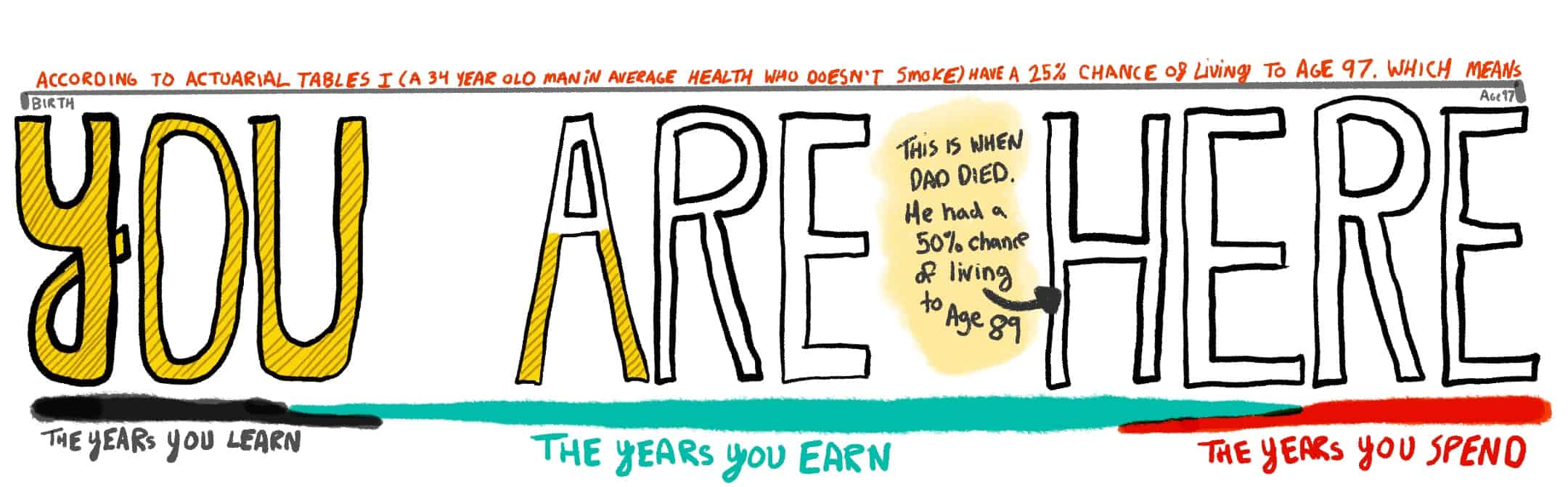
I’m so glad he didn’t. I’m so glad he focused more on enjoying his life than worrying about age 95.

That’s easy for me to say now, because I know the answer to the when--will-he-die question. And his death has called into question the true complexity at the heart of retirement planning.

It must be balanced. Some of you are excellent, intentional, in-the-moment spenders. Some of you are great in-the-future savers. But you need to talk. Learn from each other. We need both of these skills to have a shot at the right balance.

This is really hard, but it’s an area in which planning can really help. Not because it'll show you what will happen, clearly we have no idea. But what it can do is guide you through the process of fully considering what you want, both now and later. What do you want your impact to be? Where do you want resources to go after you’re gone? How do you want to live now, and how can you build meaningful spending towards those values now, while balancing potential futures?

Never let anyone convince you that saving is all there is to solving your later life planning. It’s only a piece of the puzzle.

Those who do not grow old

Illiterate doesn’t mean unskilled

Just because someone is financially “illiterate” with the conventional financial system does not mean they are unskilled at managing the base problems that the system was built to solve

We must never forget how much can be learned from those who do things differently. How important it is for those of us who teach, to also listen and learn... not just about the latest tax law, but from those who have never heard of it.

This belief is built off of my firm stance that finance’s true complexity is not based in formulas and opaquely constructed instruments. It’s complex because at its heart are the fundamental questions of:

What do I want? What is enough? And how do I take one step forward in a world full of uncertainty?

Those who do not grow old

I need you to know that bankruptcy (or a consumer proposal) will not be the end of your story

There will be bankruptcies. How can there not be, with work stopped all through the film and theatre worlds.. and with the typical side jobs in service and hospitality spaces limited at best .. how can there not?

There will be hard choices. Homes will be sold. Families will be moved. And yes, bankruptcies will be filed.

There’s a lot of stigma around that word. It is, in some circles, synonymous with failure. This is not true. It, like so many financial tools, is a relief valve for those of you who may be completely buried.

Here are a few things to know about bankruptcies (in Canada):

  1. They can include credit card, line of credit, tax and some student loan debt (if you’ve been out of school for at least 7 years)
  2. Once you’ve gone through the process, it drops off your record in 7 to 10 years
  3. You can talk to a bankruptcy trustee without having to start the process. They can give you more information on how this will look for your specific situation
  4. Another alternative is a consumer proposal, which means setting up a structured plan but means paying less than you owe. Ask a trustee if that might be better for you (or email me if you have a few questions)

COVID has been a disaster for the arts industry. I don’t know what you’ll have to do, but I want you to have a good idea of the tools at your disposal.

Those who do not grow old

U.S. Citizens living in Canada… you’ve got some filing to do

In my spare time these days, I’ve been sitting in the back yard and reading about cross border taxation issues, specifically between Canada and the U.S.

Don’t I sound cool?

So many of the people that I know and work with have lives that stretch beyond the Canadian border. And as soon as you put a toe across, things with your finances get a bit more complicated.

This is never more true than when looking at U.S. citizens living in Canada (yes, that includes all you dual citizens out there).

If you’re a U.S. citizen living in Canada and you aren’t filing U.S. taxes… you should get yourself to an accountant post haste. It doesn’t matter if you’re making money in the U.S. or not, you NEED TO BE FILING A U.S. TAX RETURN EVERY YEAR.

You also may have to file a bunch of other forms based on what kind of assets you have kicking around.

The most famous non-tax-return IRS filing is called the FBAR.

If the sum total of the highest balances in your accounts is more than $10,000, you have to file this form. If you think that’s you and you have more questions, feel free to shoot me (or your accountant) an email.

The FBAR is filed electronically, and isn’t all that hard to file yourself. But if you don’t file it, there can be penalties of as much as $10,000 per account not filed. So… better to get on it.

Those who do not grow old

Weeds are just plants you didn’t choose

As I pulled the tiny weeds surrounding my beet plants I was reminded... I had no idea what I was pulling. Maybe they were something better than beets... such things are not impossible to imagine.

In this garden that is new to me, many things have sprung up this year that I can’t identify. Some I’ve let grow, some I’ve pulled. But what’s become increasingly clear as I thin my radish and kale rows is that I have to choose.

It’s a fairly decent metaphor for money use. Too much emphasis is put on the cutting of expenses. I think it’s better to view your spending through a gardening lens.

What are you growing? What are you not growing?

The things you pull are not cosmically less valuable. They are merely the things you aren’t choosing right now. And no, you won’t always know what they are. There will be missed opportunities that, if you let them, may haunt you. That’s got to be okay.

And maybe instead of the first question of finance being: what did you pull up? Maybe we should frame it as ... what did you leave in.

Because pruning expenses is not about less. It’s about more for the things that you care about.

EMAIL ME